
Long-time Mesa neighbors know the sound. A faint scratching above the ceiling just after dark, a rustle behind the water heater, or a line of greasy smudges along a baseboard in the laundry room. In the older parts of the city, from the historic districts off West Second Street to the flood-irrigated lots near Alma School Road, rodents have had decades to learn where the easy entrances are. If you have owned your home since the land around Falcon Field was still mostly citrus groves, you have almost certainly patched a hole or two already.
Here is the part that surprises people who have lived in the same house for twenty or thirty years. A house mouse can slip through a gap about the width of a pencil, and a roof rat needs an opening no bigger than a quarter. Established Mesa neighborhoods offer both in abundance, thanks to settling foundations, brittle weather stripping, and mature landscaping that has grown right up to the roofline. Knowing where rodents get in is the first real step toward keeping them out, so this guide walks through seven of the most common entry points we find on older Mesa homes. Reliable Mesa AZ pest control services start with exactly this kind of walk-around inspection.

Why older Mesa neighborhoods see more rodent pressure
Mesa grew up around agriculture, and a lot of its established neighborhoods still sit on flood-irrigated lots shaded by decades-old citrus, olive, and palm trees. That combination is a rodent buffet. Roof rats thrive in the dense canopy near the Consolidated Canal and the older streets south of Broadway Road, using overhanging branches and utility lines as highways to the roof. House mice and pack rats work the ground level, moving between block walls, woodpiles, and the warm cavities of a home the moment the evenings cool off. Homes built before modern sealing standards tend to have more original weep screens, uncapped vents, and hairline foundation cracks, which is why the same houses near Dobson Ranch or the Lehi area can see repeat activity year after year. A quick look at how to spot rodent runways in the yard often reveals the trails long before anything gets indoors.
1. The garage door and its worn seals
The single most common way rodents enter an older Mesa home is straight under the garage door. The rubber sweep at the bottom hardens and curls in our sun, and the corners where the sweep meets the track leave a gap that a mouse treats like an open door. Once inside the garage, the door into the house, pantry shelving, and stored boxes are only a short trip away. Replacing the bottom seal and adding corner blockers is one of the cheapest, highest-impact fixes on this list.
2. The roofline, tile gaps, and overhanging branches
Roof rats earn their name in Mesa. They climb citrus trees, bougainvillea, and power lines to reach the roof, then exploit gaps under clay tiles, at the fascia, and around the chimney. Trimming branches back at least four feet from the roof removes the bridge. This matters because rodents range farther than most people expect once they establish a nest, as we cover in this look at how far mice roam from a nest.
3. Weep holes and utility penetrations
Older Mesa homes are full of small openings that were never meant to be rodent-proof. Weep holes at the base of brick veneer, the gaps where copper and PEX lines pass through exterior walls, and the openings around gas and irrigation lines all give a mouse a foothold. Fine stainless mesh and rodent-grade sealant close these without blocking the drainage weep holes are meant to provide.
4. Foundation cracks and block wall gaps
Decades of monsoon swelling and dry-season shrinking open hairline cracks in slabs and stem walls. Where a block perimeter wall meets the house or the ground has settled, mice and pack rats find shaded, protected runs. Sealing these gaps also helps with scorpions and crickets that use the same routes, which is why a thorough exterior treatment pays off across multiple pests.
5. Attic, roof, and dryer vents
Vent screens rust out, dryer vent flaps stick open, and old turbine or gable vents lose their mesh. These openings put a rodent directly into the attic, where insulation makes ideal nesting material. From there they follow wiring and ductwork down into the living space. Rodents are remarkably good at using these hidden pathways, as this explainer on how rodents travel through HVAC chases makes clear.
6. Gaps under exterior doors and torn window screens
Threshold sweeps wear down, and the side doors and Arizona rooms common on older Mesa properties often sit slightly out of square. Add a torn screen on a bedroom window that stays cracked for the evening breeze, and you have a ground-level invitation. Weatherstripping and screen repair are simple, but they are easy to overlook year after year.
7. Sewer lines, drains, and the garage-to-house door
Roof rats and Norway rats can travel sewer lines and emerge through a dry floor drain or a damaged clean-out. Meanwhile the interior garage-to-house door, if it lacks a good sweep, is the final gap between a rodent in the garage and the kitchen. Keeping drains capped and that door sealed closes the loop on the seven most common routes.
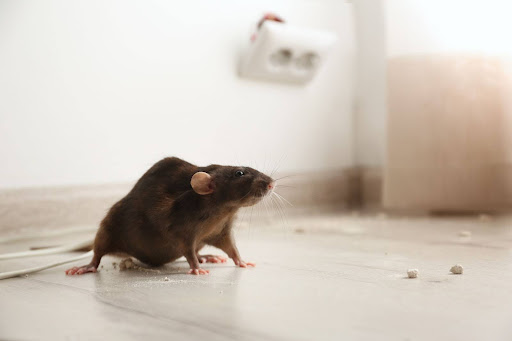
Exclusion beats extermination
Trapping and baiting deal with the rodents already inside, but they do nothing about the next family looking for the same warm cavity. Exclusion is the practice of finding and sealing every viable opening so the problem does not simply repeat. This is where a professional rodent control program earns its keep, because a trained technician knows to check the spots a flashlight from the ground never reaches. For long-time owners who have chased mice on and off for years, a full exclusion inspection is often the thing that finally ends the cycle. Green Magic pairs that inspection with ongoing service, and our rodent control built for Mesa homes focuses on the exterior first so pests are stopped before they get in.
The health reasons to act, not just the nuisance
It is tempting to treat a mouse or two as a minor annoyance, especially in a house you have kept clean for decades. The health picture is the reason not to wait. Rodent droppings and urine can spread salmonella and, in the case of certain wild mice, hantavirus, and the dander they leave behind aggravates asthma and allergies. Nests chewed into wiring are also a documented fire risk. The EPA offers plain guidance on responsible control and safe product use in its Do Your Part, Be Pesticide Smart resource, and it reinforces why sealing and sanitation come before heavy chemical use.
When to bring in a professional
If you are seeing droppings in more than one room, hearing activity in the attic on consecutive nights, or finding gnaw marks on food packaging, the population is past the point a couple of snap traps will fix. A reputable team serving Mesa and the wider Maricopa County service area will inspect the full exterior, seal entry points, set a monitoring program, and come back to verify the activity has stopped. As a family-owned pest control company in Mesa AZ, Green Magic uses organically derived, pet-safe and child-safe products, and every plan is backed by a bugs-gone-or-your-money-back guarantee. Dependable pest control in Mesa AZ is less about spraying and more about closing the door on the pest for good.
Frequently Asked Questions
How do I know if I have a rodent problem or just one stray mouse in my Mesa home?
One stray mouse rarely stays alone for long. Look for repeat signs across time and location, such as droppings in more than one room, greasy rub marks along baseboards, gnaw marks on packaging, or scratching heard on consecutive nights. Activity that keeps returning after you clean it up points to an established population and an open entry point rather than a single wanderer.
Are roof rats really a problem in Mesa AZ?
Yes. Roof rats are well established across the Phoenix metro, and Mesa neighborhoods with mature citrus, flood irrigation, and dense landscaping are prime habitat. They travel along branches and utility lines to reach the roof and enter through tile gaps and vents, so tree trimming and roofline sealing are key parts of controlling them here.
Can I seal rodent entry points myself?
You can handle the easy ones, like replacing a worn garage door sweep, adding door thresholds, and repairing torn screens. The harder entry points on older homes, including roofline gaps, vent screens, and weep or utility penetrations, are easy to miss from the ground. A professional exclusion inspection finds and seals the openings a do-it-yourself pass usually leaves open.
Are the products safe around my pets and grandkids?
Green Magic uses organically derived products chosen to be pet-safe and child-safe when applied by a trained technician. Much of effective rodent work is mechanical anyway, meaning sealing gaps, trapping, and sanitation rather than broadcast chemicals, which keeps exposure low for the people and pets sharing your home.
How often should an older Mesa home be inspected for rodents?
An annual exterior inspection is a sensible baseline for most established Mesa homes, with an added check heading into fall when cooling nights push rodents to seek shelter. Homes near canals, washes, or heavy citrus may benefit from a recurring service schedule to catch new entry points as the structure ages.
Green Magic Pest Control has helped Mesa AZ families outsmart desert pests since Matt founded the company in 2016. Our bug wizards work their magic with organically derived, pet-safe products and a no-pressure, same-day approach. Ready to seal the rodents out for good? Book your Mesa service today.