
Turnover week is the only time all year you get an empty unit, good light, and nobody’s furniture in the way. If you own or manage rental property in Tempe, that window between move-out and move-in is worth more than a fresh coat of paint. It is your one clean look at what is actually living in the walls, the weep holes, and the block wall out back. A careful walkthrough now costs you an hour. Missing something costs you a mid-lease emergency call, a habitability complaint, and a tenant who does not renew.
Tempe makes this harder than most East Valley cities. Between the ASU rental market around Apache Boulevard and University Drive, the older ranch stock in Maple-Ash and Escalante, the newer mid-rise units near Tempe Town Lake and Rio Salado Parkway, and the irrigated lots south toward Guadalupe Road, you are managing buildings that sit on wildly different pest pressure. Add the Salt River corridor, Papago Park, and Kiwanis Park greenbelt as year-round harborage, and a unit that was clean in March can be a problem by August. Working with a pest control company in Tempe AZ that already knows those patterns saves you from re-learning them one turnover at a time.
Start Outside Before You Ever Open the Front Door
Most infestations are recruited from the exterior, so walk the perimeter first. Stand at the block wall and look at the base of it. Bark scorpions live in the hollow cores of block walls and under the cap, and they hunt at night along the wall line before slipping under a door sweep. If the previous tenant left landscape rock piled against the stem wall, wood scraps behind the shed, or a stack of moving boxes on the patio, that is harborage you can remove in ten minutes.
Check the irrigation. Tempe lots on flood irrigation or with old drip lines almost always have a leak somewhere, and standing water is the single strongest attractant you can leave behind. Wet soil next to the foundation pulls in crickets, and crickets pull in bark scorpions that feed on them. Look for a green patch of soil that has no business being green in July.
Then get low and look at the foundation itself. Pencil-width mud tubes running up the stem wall or along the garage slab are the calling card of subterranean termites, and they are common across the older parts of Tempe where slab construction sits directly on native soil. Termites will not get you a tenant complaint, but they will absolutely show up on an inspection report the day you decide to sell or refinance.
Finally, count your gaps. Door sweeps that no longer touch the threshold, weep holes with no screens, garage door corner seals worn into a triangle of daylight, dryer vents with a missing flap, and utility penetrations around the water line and AC lineset. Every one of those is a doorway. Mice need a gap the width of a pencil and roof rats need about the size of a quarter.
The Kitchen Tells You the Truth
Pull the range out. Pull the refrigerator out. This is the part of the walkthrough people skip because it is annoying, and it is also the part that matters most. German cockroaches nest in warm, tight, greasy spaces, which means the motor compartment of the fridge, the void behind the dishwasher, and the underside of the range hood are their preferred addresses. You are looking for three things. Live insects scattering when you move something. Dark pepper-like fecal specks along the corners of shelves and inside the hinge of a cabinet door. And small brown egg cases, roughly the size of a grain of rice, wedged into a crack.
If you find any of those, treat the unit as active. German cockroaches reproduce fast enough that a handful of survivors becomes a full-blown problem inside a single lease term, and they are far easier to eliminate in an empty kitchen than in one that is loaded with a family’s groceries and dishes. Empty units are a gift here. Use them.
While the appliances are out, look for ant trails running from a slab crack toward the sink base. Odorous house ants and pavement ants show up wherever there is a slow drip under a P-trap, and in a Tempe summer they will move indoors purely for the water.
Bedrooms, Closets, and the Bed Bug Conversation Nobody Wants
Bed bugs travel with people, which makes turnover the highest-risk moment in the entire lease cycle, especially in student-heavy buildings near campus where furniture moves in and out every August. In an empty bedroom you are checking the edges. Run a flashlight along the baseboard seam, the carpet tack strip, the underside of a closet shelf, and any wall-mounted headboard or built-in furniture that stays with the unit. Rust-colored smears, tiny dark spots, and translucent shed skins are what you want to catch.
If the outgoing tenant reported bites at any point, do not treat the unit as clean just because it looks empty. Bed bug activity survives an empty apartment for months without a host, and a single missed pocket in a baseboard can become a claim against you from the incoming tenant within weeks. This is a case where documentation and a professional treatment before the new lease starts is dramatically cheaper than the alternative.
Attic, Garage, and the Roofline
Roof rats have been established across the East Valley for years, and Tempe’s mature citrus, oleander hedges, and unskirted palms give them both food and cover. In the garage, look at the top plate where the wall meets the roof framing, and check for droppings on the tops of stored cabinets or along the water heater platform. In the attic access, shine a light across the insulation and look for runways, which appear as flattened trails, plus gnawed cardboard and shredded nesting material.
Chew damage on wiring is the one that should get your attention as an owner. Rodent-caused electrical damage is a fire risk and a liability problem, not just a nuisance, and it is rarely visible until someone goes looking. If you see any sign of roof rats or mice, the fix is exclusion and not just trapping. Sealing the entry points is what actually ends the cycle. Trim tree limbs back at least four feet from the roofline before the new tenant moves in, because they will not do it and the branches are the highway.
Multi-Unit Buildings Have Their Own Rules
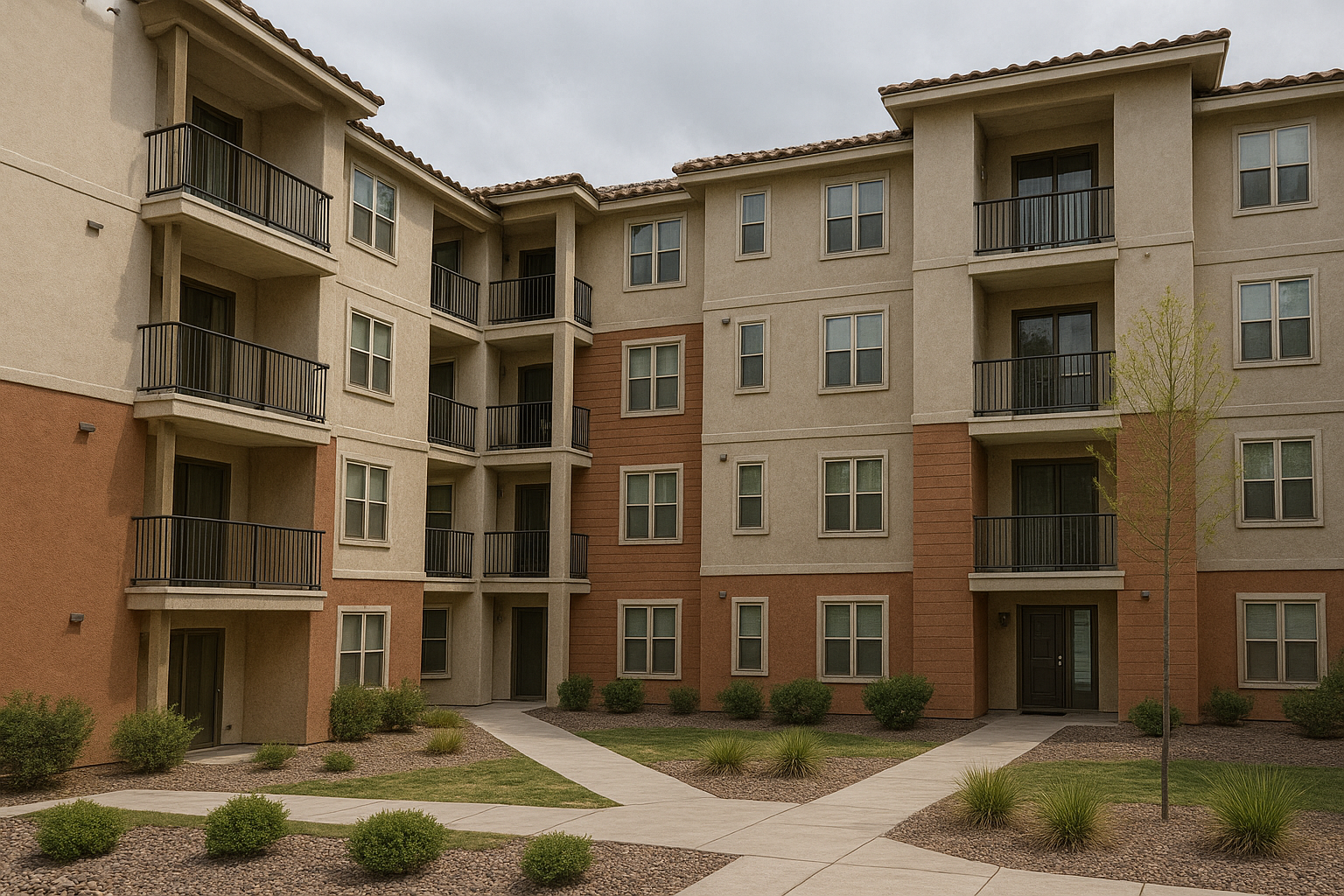
If you manage a fourplex off Rural Road or a larger complex near Broadway and McClintock, a unit-by-unit mindset will fail you. Cockroaches and rodents move through shared plumbing chases, common attic spaces, and the gap under a shared wall, so treating one unit while the neighbors go untouched just relocates the population. When one unit reports activity, the units directly adjacent, above, and below should be inspected too.
The same goes for common areas. Trash enclosures, laundry rooms, and utility closets are the three spots that quietly feed an entire building. A dumpster with a broken lid on a summer night in Tempe is an open invitation. Purpose-built multi-unit and apartment pest programs handle the building as one system, which is the only approach that holds up over multiple lease cycles. The EPA’s guidance on integrated pest management principles makes the same point, that sanitation and exclusion do more long-term work than repeated spraying.
Write It Down Before the New Lease Starts
Photograph everything you find and everything you fix, and date it. A move-in condition report that includes pest status protects you in both directions. It establishes that the unit was delivered clean, and it gives you a baseline if a tenant reports something six months later. Arizona landlords carry a real obligation to deliver and maintain a fit and habitable unit, and pest issues sit squarely inside that. A paper trail showing a professional inspection and treatment at turnover is worth having.
Put the expectation in writing for the tenant too. Tell them who to call, how fast to report a sighting, and what they are responsible for regarding food storage and trash. Most escalations start with a tenant who saw one roach in March and did not mention it until June.
Where a Professional Changes the Math
Plenty of owners try to handle turnover with a can of spray from the hardware store and call it good. That approach fails in predictable ways, which is worth understanding before you rely on it, and we covered the specifics in our comparison of store-bought sprays versus professional treatment. Contact sprays kill what you hit and do nothing to the nest, and with German cockroaches, repellent products actually scatter a population deeper into wall voids and make the follow-up harder.
Pest control in Tempe AZ handled at turnover works differently. A thorough initial service treats the interior cracks and voids while the unit is empty, establishes an exterior perimeter barrier, and knocks down harborage on the property line. If you want the specifics of what that first visit covers, our page on what an initial treatment includes lays it out. From there a recurring exterior schedule keeps pressure off the building without ever needing tenant access, which is the part landlords actually care about, since coordinating interior entry across multiple units is its own headache.
Green Magic has been running Tempe AZ pest control services for rental and commercial property across Maricopa County since 2016, and we work across the full service area throughout the East Valley. Our products are organically derived and safe around kids and pets, which matters when a family is moving in the same week. Technicians are paid by the day rather than per job, so nobody is rushing a turnover inspection to get to the next stop. If you want a unit looked at before your next move-in, you can schedule a turnover inspection or call us at (480) 999-5302.
Frequently Asked Questions
How often should a Tempe rental property be treated for pests?
Most rental properties in Tempe do best on a recurring exterior service every other month, with an additional interior treatment scheduled at each turnover while the unit is empty. Older buildings, ground-floor units, and properties near washes or greenbelts often need a tighter schedule during the summer months when scorpion and roach activity peaks.
Is the landlord or the tenant responsible for pest control in Arizona?
Arizona landlords are generally responsible for delivering and maintaining a fit and habitable unit, which includes addressing infestations that were present at move-in or that stem from the building itself. Tenants are typically responsible for sanitation and for reporting problems promptly. Many leases assign specific duties, so the written lease terms matter, and owners should document pest condition at every turnover.
Can bed bugs survive in an empty apartment between tenants?
Yes. Bed bugs can survive for months without feeding, so an empty unit is not a safe assumption. If the previous tenant reported bites or if you find rust-colored staining or shed skins along baseboards and carpet edges, the unit should be professionally inspected and treated before a new tenant moves in.
What is the fastest way to tell if a unit has a German cockroach problem?
Pull the refrigerator and range away from the wall and inspect the motor compartments, the cabinet hinges, and the void behind the dishwasher with a flashlight. Dark pepper-like fecal specks, small rice-sized egg cases, and live insects that scatter when you move an appliance all indicate an active population that needs treatment rather than cleaning alone.
Do you need tenant access to service a rental property?
Not for routine service. Recurring exterior treatments, perimeter barriers, and yard harborage work are all completed outside without anyone being home. Interior treatment is only needed for an active indoor problem or for a turnover service in a vacant unit, which is one reason scheduling interior work between leases is so much easier for property owners.
Green Magic Pest Control has served Tempe and the surrounding East Valley since Matt founded the company in 2016. Our bug wizards use organically derived, pet-safe and child-safe products, and every service is backed by our bugs gone or your money back guarantee. Property owners can book a service online or call (480) 999-5302.