A single cockroach crossing a dining room floor in front of a table of four can cost a restaurant more than a full year of professional service. That is the math most independent operators around State Route 347 never run until they are standing in front of an inspector, reading a one star review out loud, or looking at a walk-in cooler full of product they can no longer legally serve. Pest control in Maricopa AZ gets filed as a discretionary expense right up to the moment it becomes an emergency, and by then the treatment invoice is the smallest number on the page.
Maricopa is not the quiet farm town it was fifteen years ago. Between Copper Sky, the retail pads along Honeycutt Road, the shops and offices near John Wayne Parkway, and the light industrial space filling in toward the Maricopa Casa Grande Highway, there is a real base of restaurants, salons, gyms, clinics, storage facilities, and service shops operating here. Almost all of it sits on former agricultural ground surrounded by open Sonoran desert. That matters, because the pressure showing up at the back door has very little to do with how clean the kitchen is and everything to do with what already lived on that land.
What a pest problem actually takes off the top line
Owners tend to price pest control against the treatment fee. The honest comparison is against what a live infestation costs while it is running.
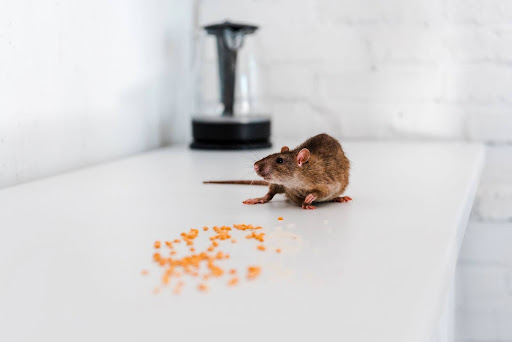
Product and inventory loss. Rodents do not need to eat much to ruin a lot. A few roof rats or house mice working a dry storage shelf will contaminate flour, rice, pet food, paper goods, and packaging far beyond what they consume, and none of it can be sold or served afterward. A single contaminated pallet in a storage room often costs more than six months of scheduled visits.
Closed hours. Whether the closure is voluntary or ordered, the lost revenue does not come back. A Saturday shut down for a deep clean and treatment during peak season is the single most expensive outcome on this list, and it is almost always the result of a problem that was visible weeks earlier and got treated as somebody else’s job.
Inspection consequences. Evidence of pest activity in a food handling operation is not a minor note. It drives reinspection, corrective action, and in some cases public record. Businesses that can hand an inspector dated service reports and a monitoring log get a very different conversation than businesses that say they had someone out once last spring.
Reputation. This is the cost nobody budgets and everyone pays. Photos travel. A rodent or a roach mentioned in a review stays searchable long after the building is spotless, and in a community this size, word moves faster than the review platform does. Recovering a reputation costs far more in discounts and advertising than preventing the sighting would have cost.
Staff and equipment. Employees who are dealing with an infestation leave. Rodents chew wire insulation behind coolers and inside electrical panels, which turns a pest issue into a repair bill and a fire risk. Both of those show up on the books somewhere other than the pest control line, which is exactly why the true cost gets underestimated.

The pests that drive commercial calls in this part of Pinal County
German cockroaches are the number one commercial problem statewide and they almost never walk in from outside. They arrive in cardboard, produce crates, used equipment, and employee bags, then settle into warm voids behind dish machines, under prep tables, and inside the motor housings of coolers. A population can double while the building is closed for the weekend, which is why a single knockdown treatment rarely holds without follow up.
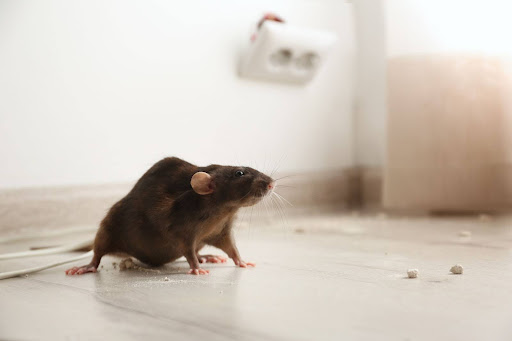
Rodents follow the same routes people and product do. Roof rats travel utility lines, block wall tops, and roof edges, and they will use a mature ornamental tree touching the parapet as a ladder. Mice come in through dock seals, weep holes, and the gap under a propped back door during a delivery. Fall and early winter push both indoors as nighttime temperatures drop.
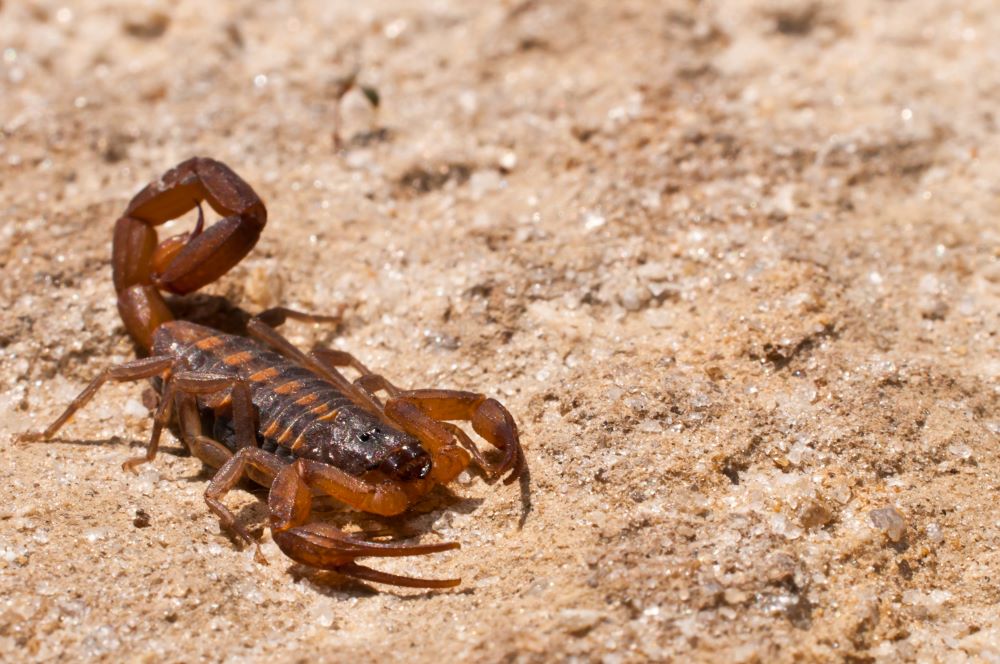
Bark scorpions are a legitimate commercial liability here, not just a household nuisance. They shelter in block wall cavities, irrigation valve boxes, landscape rock, and stacked pallets, then move at night into buildings through door sweeps and floor drains. A gym, salon, or clinic where someone gets stung on the premises has a very different kind of problem than a lost inventory problem.
Ant colonies exploit irrigation lines and expansion joints in parking areas, then trail into break rooms and beverage stations. Crickets swarm lit signage and glass entries in late summer and fall, and they feed the scorpions that follow them. Small flies breed in floor drains and under equipment mats, which is usually a sanitation and moisture problem rather than a spray problem.
Why a commercial building takes more pressure than a house
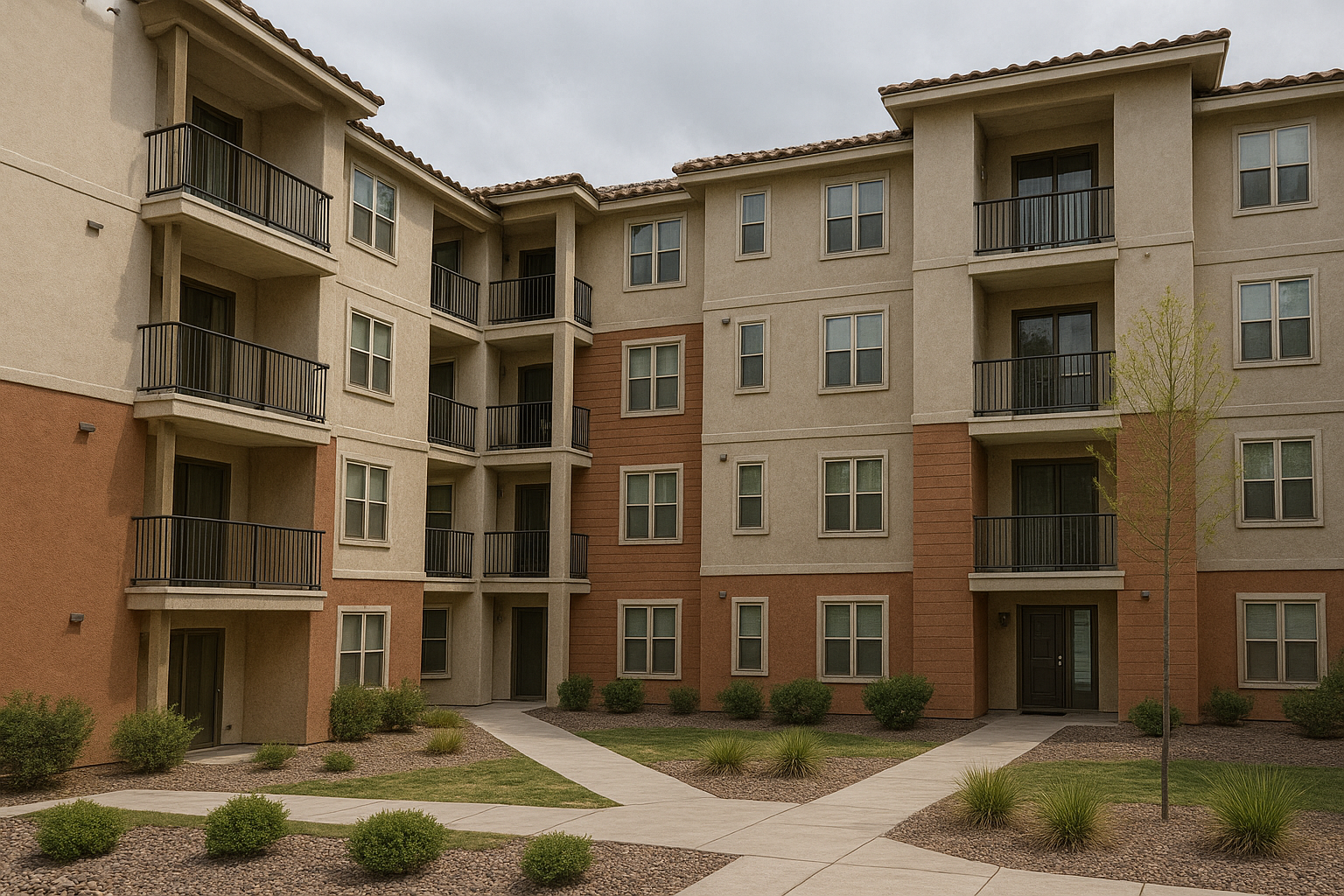
The building you go home to has doors that stay closed, a single kitchen, and no delivery schedule. A commercial space has none of that working in its favor. Back doors stand open during deliveries and trash runs. Dumpster enclosures sit near the building on hot pavement. Strip center tenants share walls, plumbing chases, and a roof, so a neighbor with a problem eventually becomes your problem. Ceilings are high, equipment is heavy and rarely moved, and floor drains connect to places nobody inspects.
That is why commercial work is built differently than residential work. The approach for a full service kitchen is not the approach for a retail storefront, and neither one matches what a warehouse with an active dock or a medical or dental office needs. The pests overlap. The access, the timing, the product selection, and the documentation do not.

What recurring service buys that a one time call does not
A crisis treatment solves what is visible today. A program solves what shows up next month. Ongoing Maricopa AZ pest control services for a commercial account generally cover a treated exterior perimeter so pressure is intercepted before it reaches the threshold, interior monitoring in the areas an inspector will look first, targeted work in voids and equipment housings instead of open surface spraying, and a written report after every visit that you can hand to a landlord, a franchisor, or an inspector without hunting for it.
The other thing it buys is early information. Most of what a technician catches on a routine visit is not an infestation yet. It is a failed door sweep, a dripping mop sink, a pallet stored against a wall, or the first monitor with something on it. Those are cheap problems on the day they are found. The same list of early warning signs to look for applies to a business, and staff who know what to report become part of the program. The federal guidance on integrated pest management says the same thing in more formal language, which is that exclusion, sanitation, and monitoring do more of the work than product does.
What to look for in a provider
Ask whether the company is licensed in Arizona and whether it carries commercial accounts already, because a residential route technician working a kitchen for the first time will miss things. Ask what the documentation looks like after each visit. Ask how quickly someone can be on site when a manager calls about a sighting, and whether that response costs extra. Ask what happens if the problem comes back between scheduled visits.
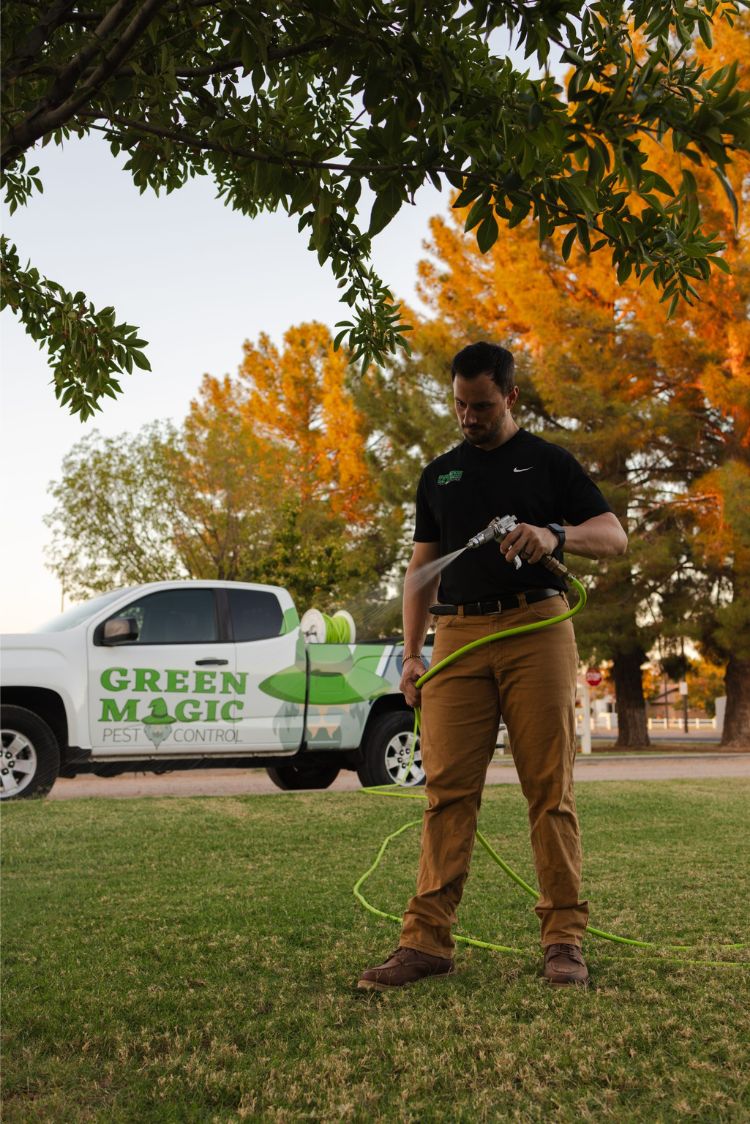
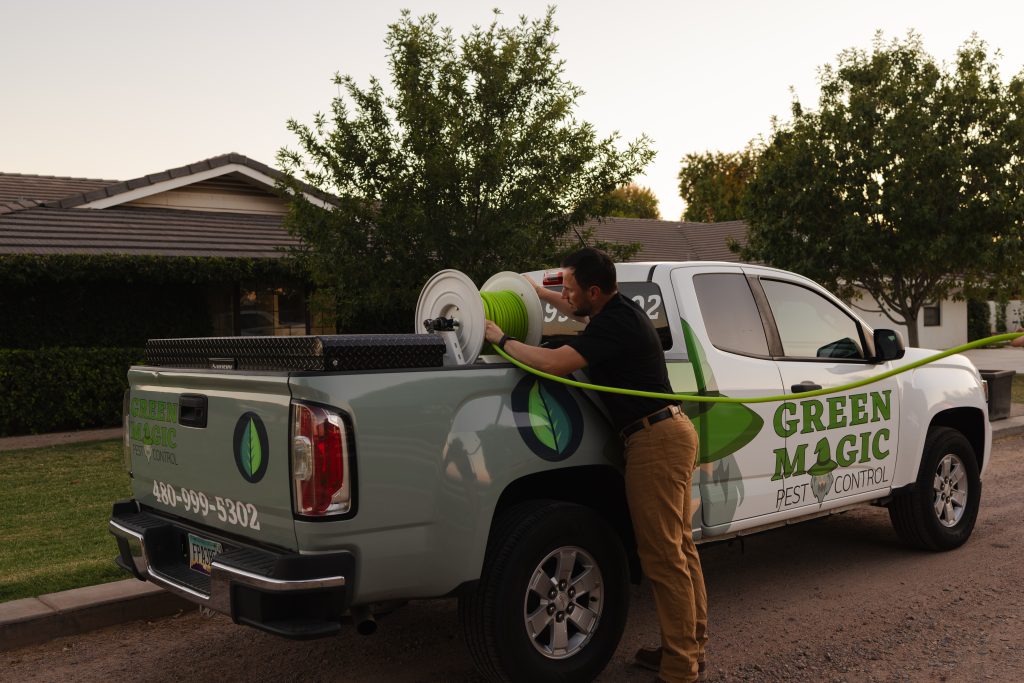
A serious pest control company in Maricopa AZ should also be able to explain what it uses and why. Green Magic works with organically derived, low odor materials, places them where pests actually harbor rather than across open surfaces, and schedules around operating hours so treatment does not collide with a lunch rush or a patient list. Technicians here are paid by the day rather than per job, which removes the incentive to rush a building or upsell a service you do not need.
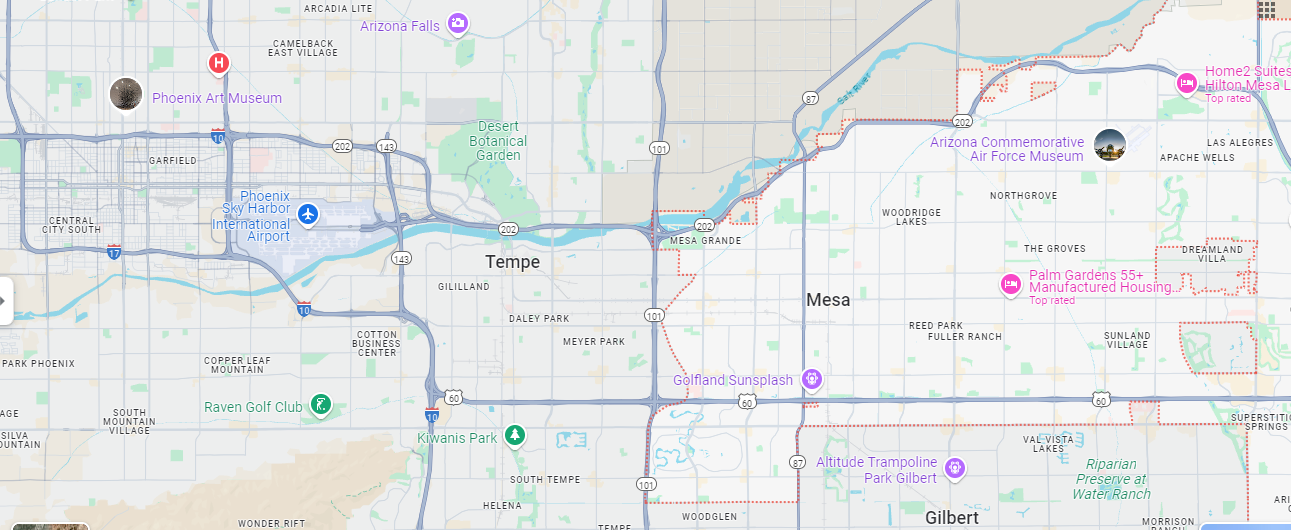
Green Magic has been serving businesses across the East Valley and south into Pinal County since 2016, and the first visit is where most of the real work happens. It covers a full interior and exterior inspection, treatment of the perimeter and interior harborage, and a plan for the entry points and conditions that let the problem start. You can see every community covered on the service area page, or schedule a visit and get a straight answer about what your building needs before the next inspection.
Find Green Magic Pest Control in Maricopa AZ
Frequently Asked Questions
How much does commercial pest control in Maricopa AZ cost?
Pricing depends on the square footage of the space, the type of operation, and how often the building is serviced. A small salon or office suite sits at the low end, while a full service kitchen or a warehouse with a loading dock needs more frequent visits and costs more. The useful comparison is not the monthly fee by itself but the fee measured against one closed day, one discarded pallet of product, or one public review describing a rodent.
How often should a Maricopa business be serviced?
Most food handling operations do best on a monthly schedule because German cockroaches and small flies can rebuild a population in a matter of weeks. Retail, office, and service businesses without a kitchen are usually fine on a bimonthly or quarterly exterior program with interior attention as needed. Warehouses and storage buildings often sit somewhere in between depending on what moves through the dock.
Does a health inspector need to see pest control records?
Inspectors in Arizona routinely ask whether a licensed provider services the building and how recently. Having dated service reports, a monitoring log, and documented corrective actions on hand turns a stressful question into a short one. It also protects you if a customer complaint is ever filed against the business.
Are the products used inside a restaurant or clinic safe for staff and guests?
Green Magic uses organically derived, low odor materials and places them in cracks, voids, and monitoring stations rather than broadcasting them across open surfaces. Treatments in food prep areas and patient areas are scheduled around operating hours, and the technician walks the manager through anything that needs to stay covered or wiped down before the doors open.
Can I treat a commercial building myself with products from the hardware store?
Retail sprays kill what they contact and then break down quickly under Arizona heat and UV, which is why a self treated building tends to look better for a week and worse for a month. They also cannot legally or practically be applied the way a commercial account needs, and they do nothing about the documentation an inspector or a landlord may ask you to produce.
Green Magic Pest Control is a family owned company founded in 2016 by Matt B. and based at 3215 N. Arizona Ave. in Chandler, serving businesses and families throughout Maricopa AZ and the surrounding communities with eco friendly, organically derived treatments. Call (480) 999-5302 or book a service visit to have a technician walk your building.